Most people want their travels to mean something. They want to feel connected, to learn something real, to come back changed. Tourism as usual rarely delivers that. It offers a checklist instead of depth, and consumption instead of connection.
At Actuality Abroad, we travel differently.
We travel to learn
Every place has its own way of solving problems, preserving traditions, and moving forward. Rather than relying on outside perspectives, we learn directly from the people who shape their communities.
In Guatemala, the social enterprise Bici-Tec is building bicycle-powered machines designed to support rural communities with sustainable, low-cost technology. These machines grind corn, shell coffee, and pump water, eliminating the need for expensive fuel or electricity. In Uganda, Fundibots integrates robotics and hands-on science into classrooms, teaching students to build their own solutions rather than waiting for outside ones.
These experiences are not packaged for visitors. They are real, ongoing efforts to create change. Our role is to listen, observe, and document with care.

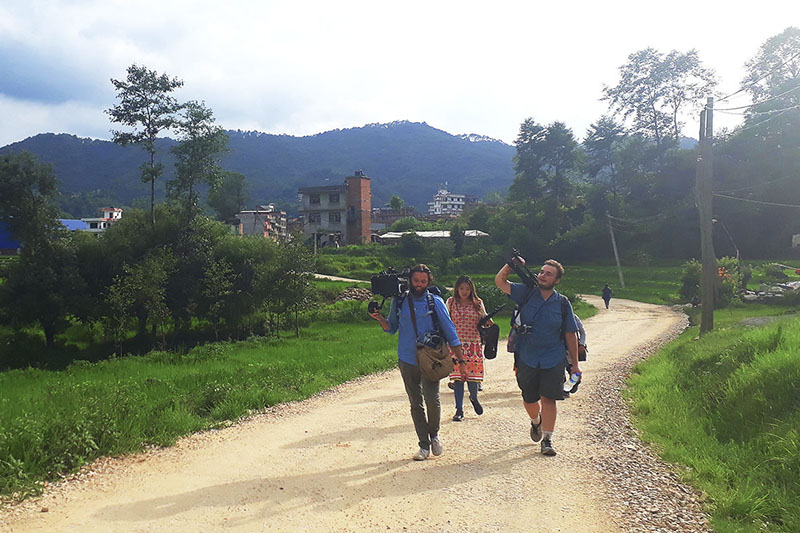
India, 2019
We travel to build relationships
A meaningful trip is shaped by the people you meet. We prioritize human connection over sightseeing, making space for genuine exchange and real collaboration.
In Tanzania, Apps and Girls is changing the landscape for young women in technology through coding workshops, mentorship, and networking. Our time with them was not about observing their work. It was about engaging in real conversations, learning from the women who built their futures through the program, and understanding how that mentorship network keeps growing.
Trust is not given freely. Connection is not automatic. It requires patience, respect, and the willingness to show up, listen, and learn.
We travel to tell stories
At Actuality Abroad, we focus on solution stories. Narratives that highlight local leadership, resilience, and what is actually being done.
In Belize, Green Hills Butterfly Ranch educates local and international students about rainforest preservation through an unlikely symbol: butterflies. In Cambodia, Penh Lenh provides vocational training and employment for women facing social and economic challenges, helping them build financial independence. In Kenya, Box Girls uses boxing to build confidence in young women growing up in Nairobi's Kariobangi neighborhood. One of their early members boxed her way onto the Kenyan national team.
These stories matter because they challenge the idea that some places are only defined by struggle. They show what is possible when people take action within their own communities.
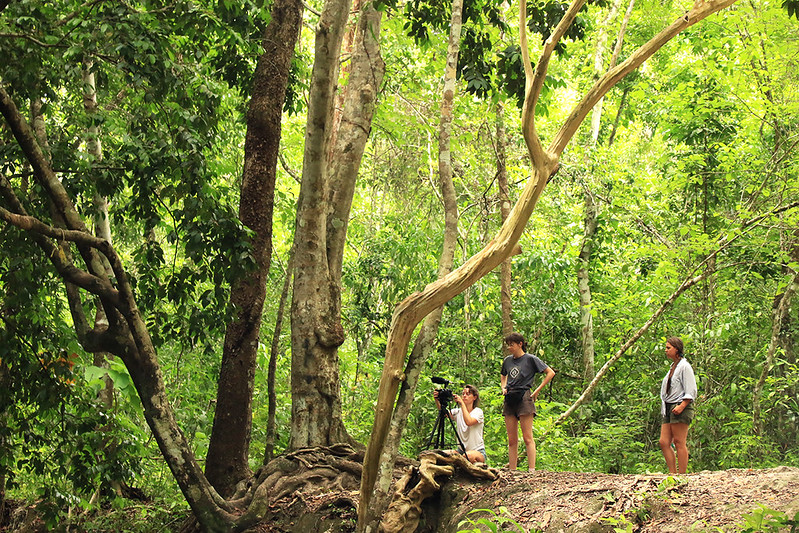
Belize, 2019
We travel to immerse ourselves in daily life
The best way to understand a place is to experience daily life alongside the people who live there. We stay in locally owned guesthouses, eat where locals eat, and use public transportation and shared vans whenever possible. These choices are not incidental. They shape the entire experience and ensure that the time and money we spend directly benefit the communities we are working in.
The stories we tell shape the culture of travel
Too often, tourism flattens a place into a single image. One famous landmark, one type of experience, one version of what it means to go there. Intentional storytelling challenges that. It reveals deeper layers of a place beyond what is marketed to visitors.
In Bali, some farmers are working to restore rapidly disappearing rice fields, reconnecting their communities with sustainable agriculture. In Vietnam, Mr. Loi is proving that organic, chemical-free farming is possible despite widespread dependence on harmful pesticides. In Kenya, Young County Change-Makers provides education and support for children in Kisumu's Nyalenda neighborhood, helping them pursue careers as journalists, pilots, and more.
When we expand the stories we share, we expand how people understand the world. Travel does not have to be extractive. Through honest storytelling, it becomes something else: a practice of connection, learning, and contribution.