Cost is the reason most people never apply. It's also the most solvable problem on this page.
Our participants have funded their programs with federal scholarships, Rotary clubs, local arts organizations, campus grants, and campaigns run from their kitchen tables. Most of that money goes unclaimed because nobody asks. Here's where to ask, and when to ask for it.
The Documentary Outreach carries academic credit, whether your program lands in Phnom Penh, Santa Marta, or somewhere else on the calendar. That one fact opens nearly every door below.
Gilman is the one to check first
If you receive a Federal Pell Grant, apply for the Benjamin A. Gilman International Scholarship before anything else on this list. It pays up to $5,000 toward a credit-eligible program abroad, the average award lands around $4,000 for fall and spring terms, and Gilman funds close to 3,000 students a year. There are two cycles: the October deadline covers programs running from December through the following October, and the application opens in mid-August, with decisions out by December. The March deadline covers programs from May through the following April, and that application opens in mid-January. Studying a critical language adds up to $3,000 more. Start your essays as soon as your program dates are confirmed. Gilman moves fast once the portal opens, and late applications are never accepted.
If Gilman isn't yours to apply for
The Fund for Education Abroad exists specifically for students underrepresented in study abroad: first-generation students, community college students, students of color. It pays a minimum of $1,250 for a program as short as two weeks, up to $5,000 for a semester, and up to $10,000 for a full year, and it runs the Rainbow Scholarship for LGBTQ+ students inside the same application. The main cycle opens in late November and closes in early February. The Boren Scholarship pays up to $25,000 for U.S. citizens studying a critical language like Arabic, Mandarin, or Swahili, in exchange for a year of federal government work after graduation; the national deadline falls in late January, with decisions in April. Freeman-ASIA funds study in East and Southeast Asia, including Cambodia specifically, at up to $3,000 for a summer, $5,000 for a semester, and $7,000 for a full year; the deadline is the first week of April. Phi Kappa Phi hands out seventy-five $1,000 grants a year to students with a 3.75 GPA at a school with an active chapter, through a portal that opens in December and closes March 15. If you're a veteran, the Post-9/11 GI Bill can apply here too, no application deadline, but give your campus veterans office at least a couple of months to process the paperwork before your deposit is due.
You're not a student asking for tuition. You're an artist asking for production money.
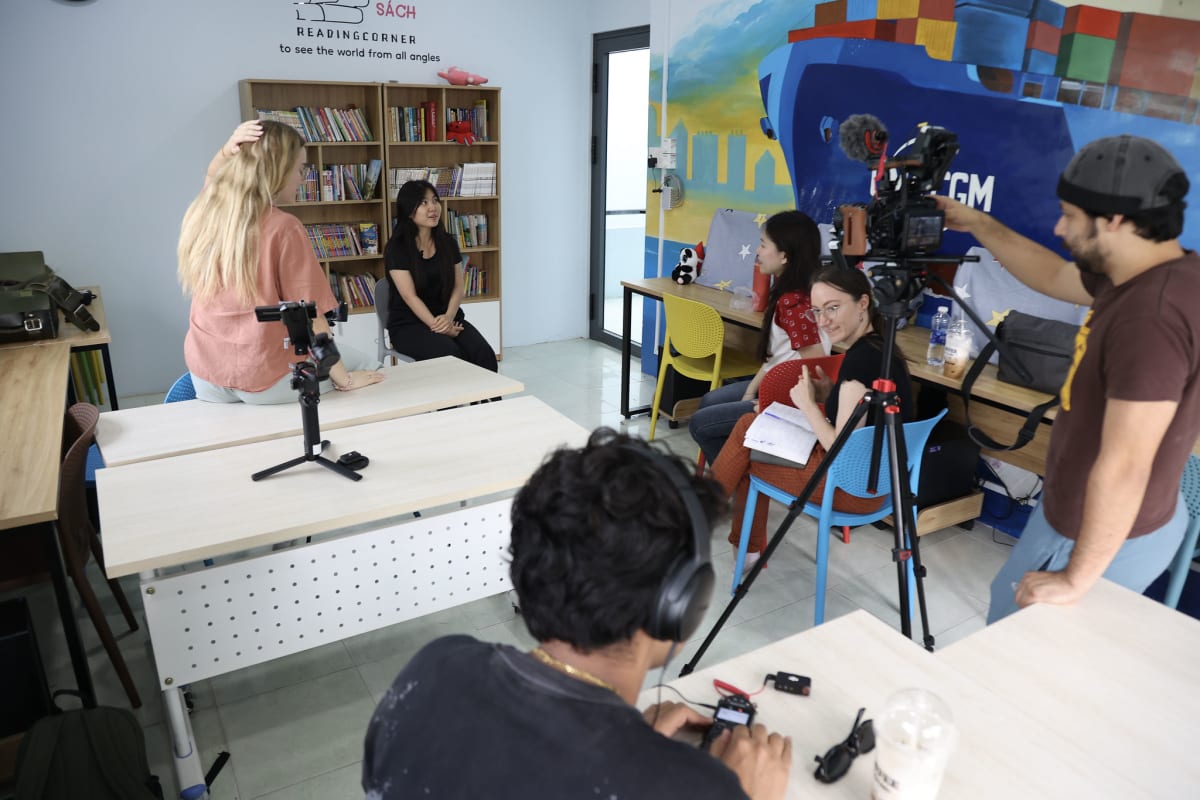
This program produces a documentary film or a photography portfolio, which makes you an artist with a project, not a student with a request. State and local arts councils fund individual artists, and several fund travel tied to a creative project; deadlines vary by state, so check yours at least four months out. The Lucie Foundation's documentary and photojournalism category pays $1,000 to emerging photographers and $3,000 to working professionals, with the application closing in early June and winners announced in October, which makes it a fit for anyone heading out on a summer or fall program. Local galleries and camera clubs have sponsored our participants before. Bring them a one-page pitch and an offer to screen the finished film for their members when you're back. We can send you real photos and behind-the-scenes footage from the program to build that pitch, and the finished films on our site are there if a reviewer wants proof this is a real production. The screening offer is what gets you funded.
Ask your school before you ask a stranger
Nearly every university runs its own study abroad grants that never make it onto a national list, and most open a full semester before the term they fund, so ask early. Your film, journalism, or communications department may hold travel funds built for exactly this kind of project. Your financial aid office can often apply a Pell Grant or student loans directly to a credit-bearing program abroad, and that's a single meeting, not a process. Your advisor knows about the endowed scholarship with three applicants a year that nobody else has heard of. Ask directly: "I'm doing a credit-bearing documentary program abroad. What funding should I know about?"
Ask your town
Rotary has funded Actuality Abroad participants before, and the ask is usually a short letter and a ten-minute talk at a club lunch. Most clubs set their giving budget once a year, often in the spring, so a summer or fall program means asking months ahead, not weeks. Offer to come back and present your film when you get home. They'll hold you to it, and they should. (Rotary's Global Grant Scholarships are a separate program for graduate study, starting at $30,000, with timelines that vary by district. Worth knowing about if that's you.) Kiwanis, Lions, Elks, your county community foundation, your credit union, your employer: $250 here and $500 there is how a lot of our participants closed the gap, and most local awards like these post their deadlines every spring.
Apply to everything
Most scholarship applications never get finished. The students who get funded are the ones who applied to eight things, not the ones who qualified for eight things. Start six months out, before deadlines, not after you've missed one.
If you're planning to raise the rest yourself, that's its own project, with its own rules. Read our guide to running a crowdfunding campaign next.
You know what this program costs. Start with the one line above that applies to you.